

This will piss someone off.
Ego, noise & control

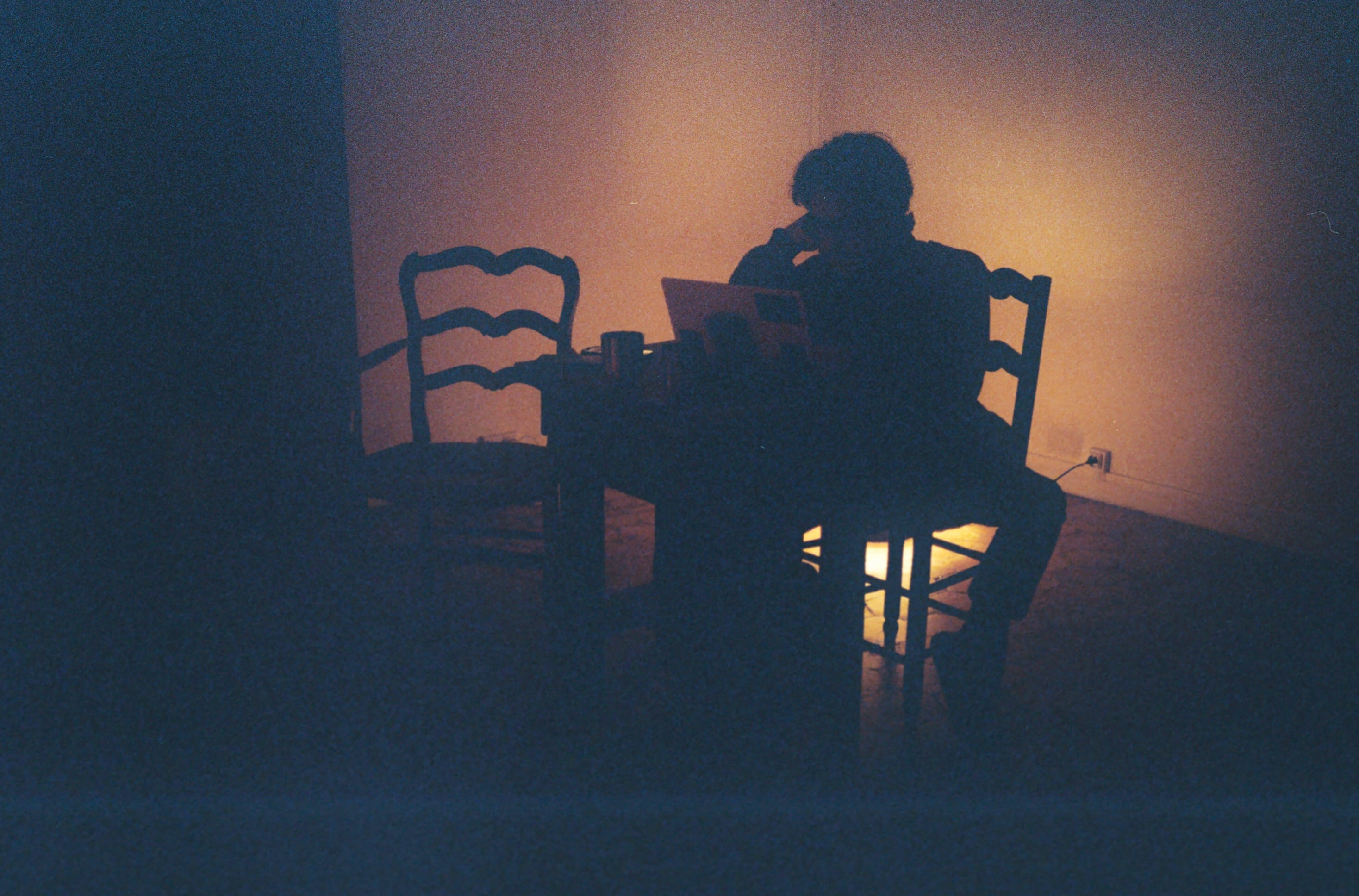
I wrote this listening to this.
I don’t usually do posts like this. I don’t like feeding into online discourse. There’s already way more than enough of it out there. I’m not writing this to “defend myself” in any way. That is almost always an entirely pointless exercise. What matters is that I know I put my heart into what I do, I’m not attacking anyone, and I always try to say something, as opposed to saying nothing (which is what a lot of the internet feels like – people saying a lot of nothing).
When you say something, when you take a stance, when you question things and show up unapologetically, it provokes reactions from people. People get triggered, usually unknowingly, and then what they say says a lot more about about them than it does about what they’re commenting on.
I’m writing this because I have watched every single person I know that puts their heart into what they make and share online, have to learn to navigate this. You put it out into the world and it can (and often does) get ripped to shreds in the comments section. How do you learn to not let these comments or messages knock you off balance? In 2025, we all know that the internet can be an unbelievably vitriolic, reactive, fast-moving space.
And it’s a space we’re all spending more and more time in. It has (very obviously) changed how humans interact with each other. You can write things to people you will never meet, anonymously and from the other side of the world. Which means people can say things they’d never dare say to someone’s face because they don’t have to deal with the consequences.
Still, it’s easy to forget this because a message or a comment sent or left for YOU will always feel personal.
What I wish I understood when I started posting videos online a decade ago is that no matter what you make, if enough people see it, it’s going to piss someone off. Almost all mental energy directed towards worrying about this is a waste. About 5-10% of the people that see anything that I’ve ever made, don’t like it.
Allow me to use my most recent video as a way to show you what this looks like: I did Hemingway’s daily routine. It’s an old format of video I’ve done in the past, that I enjoy, and that I partially did as an excuse to do more writing for this Substack. I don’t actually care about people’s daily routines, I have no actually interest living like anyone else, it’s just a format that’s easy for people to quickly understand/is clickable, and gives me the chance to learn more about someone who’s work has impacted me.
As always, the majority of the response was positive, but also as always, you get a little bit of everything, ranging from random to very aggressive.
Important to note: I actually didn’t look at the comment section at all for this one until I spent the 5 minutes it took me to scroll through and screen shot what you are about to see below.
Let’s go through a few, shall we?
Some comments make no sense:
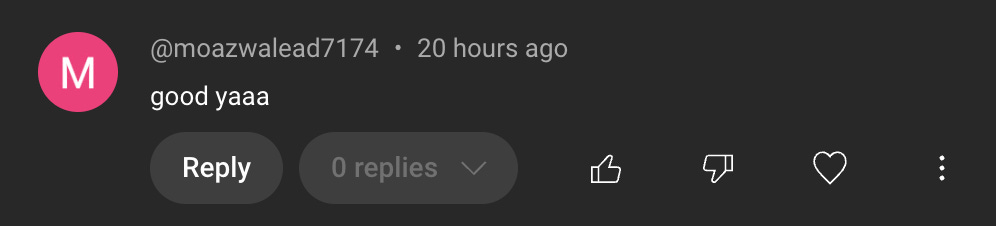
Some clearly illustrate a misunderstanding (asking a question I already answered in the video):

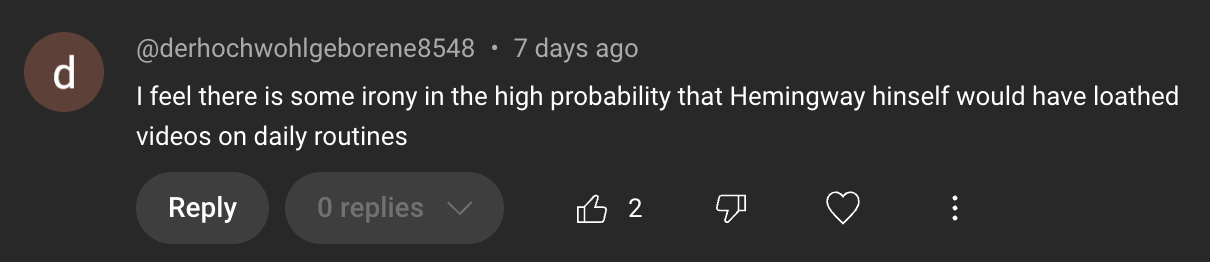
Many comments on the internet — dare I say most — are entirely speculative assumptions – like what Hemingway would have thought about what I made, as if anyone other than Hemingway is in an position to speak on his behalf:
I’ve disappointed probably 10s of thousands of people with what I’ve made over the last decade, as illustrated by comments like this:
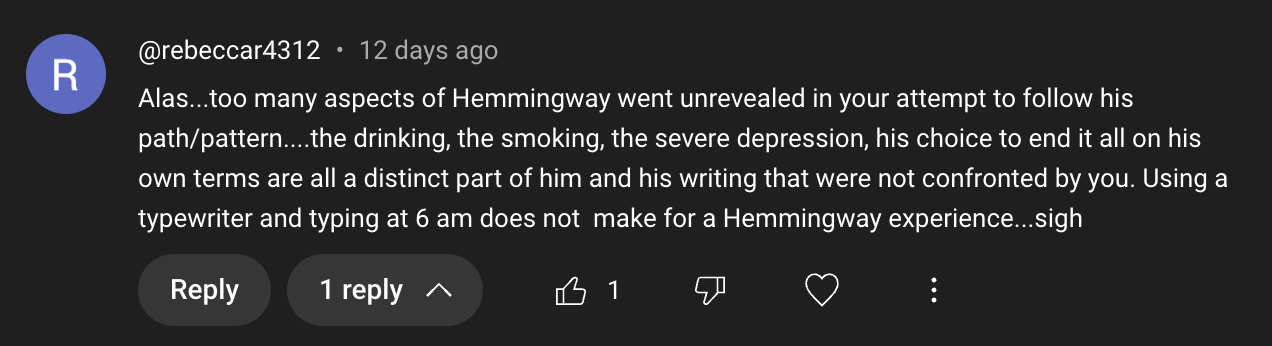
Often I will get reactions to things I did not say at all:

Gotta love the 1-word reviews:

People have a lot of opinions on what I should be doing (this one is especially spicy as there is the insinuation here that I don’t know how to be my own individual):
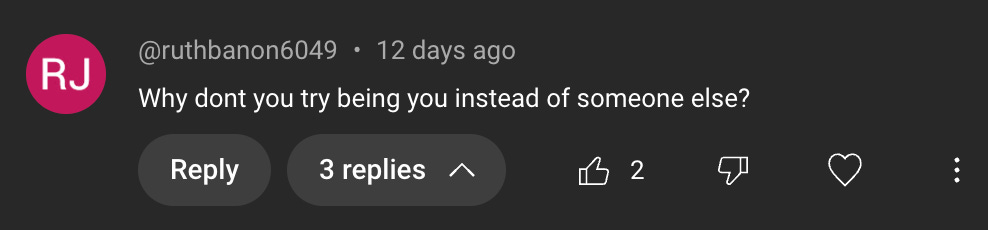
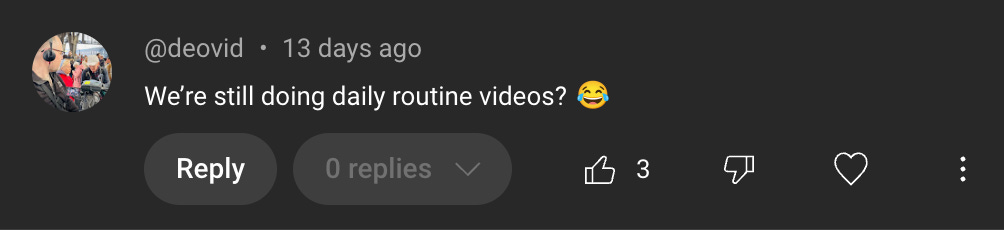
Mockery is another common one, in this case because I (roughly once a year) return to a format that I suppose this person is tired of:
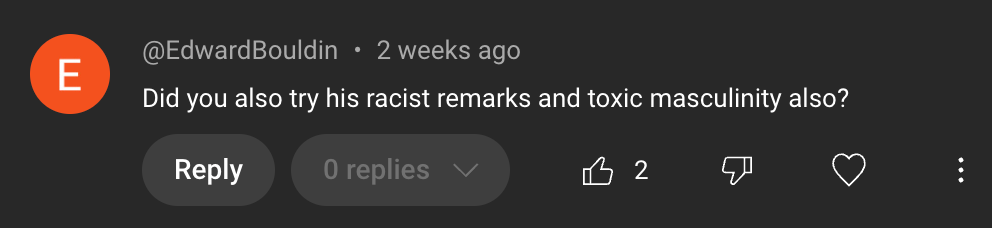
In this case, I suppose the implication is I should not have even done this given Hemingway’s reputation wouldn’t stand up to 2025 standards (according to this person) despite living in a very different time:
And then, of course, there are the personal attacks:
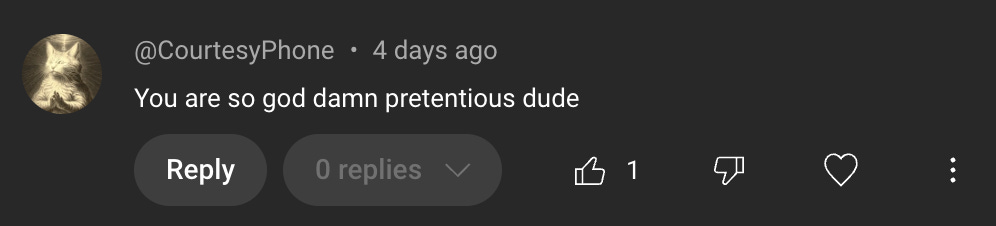
That last one on this list is so fascinating to me. I can feel in myself the impulse to fight back. But why? What do I actually have to defend and to whom? What is there to say to this person with a cat as a profile photo?
Then I remember how cowardly it is to do something like this. To leave a comment like that, anonymously. Who exactly is the person that spends their days not just watching someone they think is very pretentious but also feels the need to let them know? Don’t people have better things to do with their lives? Ironically, it is exactly this kind of engagement that finances my work, boosts me in the algorithms (not that I seek it out!).
Like I stated before, it took me just a few minutes to do this, and that’s all it takes for me to feel like a crowd of angry and confused people are shouting inside my head. It’s dizzying.
I champion both making and sharing things online. I fundamentally believe it can be such a powerful, therapeutic process. Not just that – I am vulnerable when I make what I make and share what I share because that’s what makes it special in my view and I would not have it any other way.
But dealing with the cacophony of hot takes is surely one of the more unpleasant aspects of this process. So what is one to do? I propose a two-pronged approach:
Limit how much you look at this stuff. You just don’t need to absorb all of this. It took me years to realize this. I always make an effort to respond to people but over time I came to the conclusion that I just don’t need this many opinions about what I’m doing. And certainly from people I don’t know. They’re welcome to say whatever they want, but I am under no obligation to read it.
Understand that this is all amazing material to notice and pay attention to my ego. By that I mean, learn to be zen about it. Let is pass through, knowing they’re just words and opinions, they don’t have to have any more weight than I give them.
If you ever make something viral on the internet, this cranks up a notch, the amount of opinions pouring in multiplies, but even then it all lasts like 20 minutes and then everybody has moved on.
Observing my reactions to all of this is a chance to notice where I am guarded, to loosen up, give up the illusion of control, not take myself so serious, and refocus on what matters. In more concrete terms, I’m referring to: the people in my life, the process of making things, learning about myself.
From this small list I’ve shared from just one video, you can quickly see that comments can and do go in every which direction, and are little more than projections from the viewer. They don’t say anything about me, who I am, or what my intentions were when making this video.
I think we all play it too safe most of the time. It is ok to piss people off. This is one of the biggest things I’ve been learning about these last few years. And it is so liberating. It’s not your job to worry about people’s reactions if your heart is in the right place and I know mine is.
Be bold. Be brave. Whatever you do, do not make yourself small. This life we’re living is way too special for that.
I wanted to share this, which was made by one of my paying subscribers on here! Great work Jon :)
Also, if anyone reading this is based in Austin, Texas and knows how to operate a camera, shoot me a message.
Consider upgrading to the paid tier to get access to weekly voice notes from me, monthly zoom hangouts with cool people from around the world, or if you just want to help me write more often.
I actually looked at most of the comments for your Hemingway video (before you wrote this). I don’t usually do this, but I did this time. As you said, lots of positive comments. But the negative ones pissed *me* off, and I’m just another random person. There are just so many assumptions, needless attacks. It drives me crazy knowing people are like that, even if it isn’t directed at me. Gotta work on that zen!
I love your work, AND there are things you say (in the most recent U.S. vs Europe video, for example) that I don't agree with. It would be a damn shame for me to have the latter interfere with the former. A quote I'm always reminded of on this topic:
“It is not the critic who counts: not the man who points out how the strong man stumbles or where the doer of deeds could have done better. The credit belongs to the man who is actually in the arena, whose face is marred by dust and sweat and blood, who strives valiantly, who errs and comes up short again and again, because there is no effort without error or shortcoming, but who knows the great enthusiasms, the great devotions, who spends himself in a worthy cause; who, at the best, knows, in the end, the triumph of high achievement, and who, at the worst, if he fails, at least he fails while daring greatly, so that his place shall never be with those cold and timid souls who knew neither victory nor defeat.”
—Theodore Roosevelt