

Nathaniel's Dilemma
What it really costs to own things

Some quick housekeeping: my latest video just came out, chronicling the transformation of my front and back yard this summer. You can watch it here. I’d love to hear your thoughts about it and I also recommend watching it to get even more out of this essay.
I wrote this listening to this.
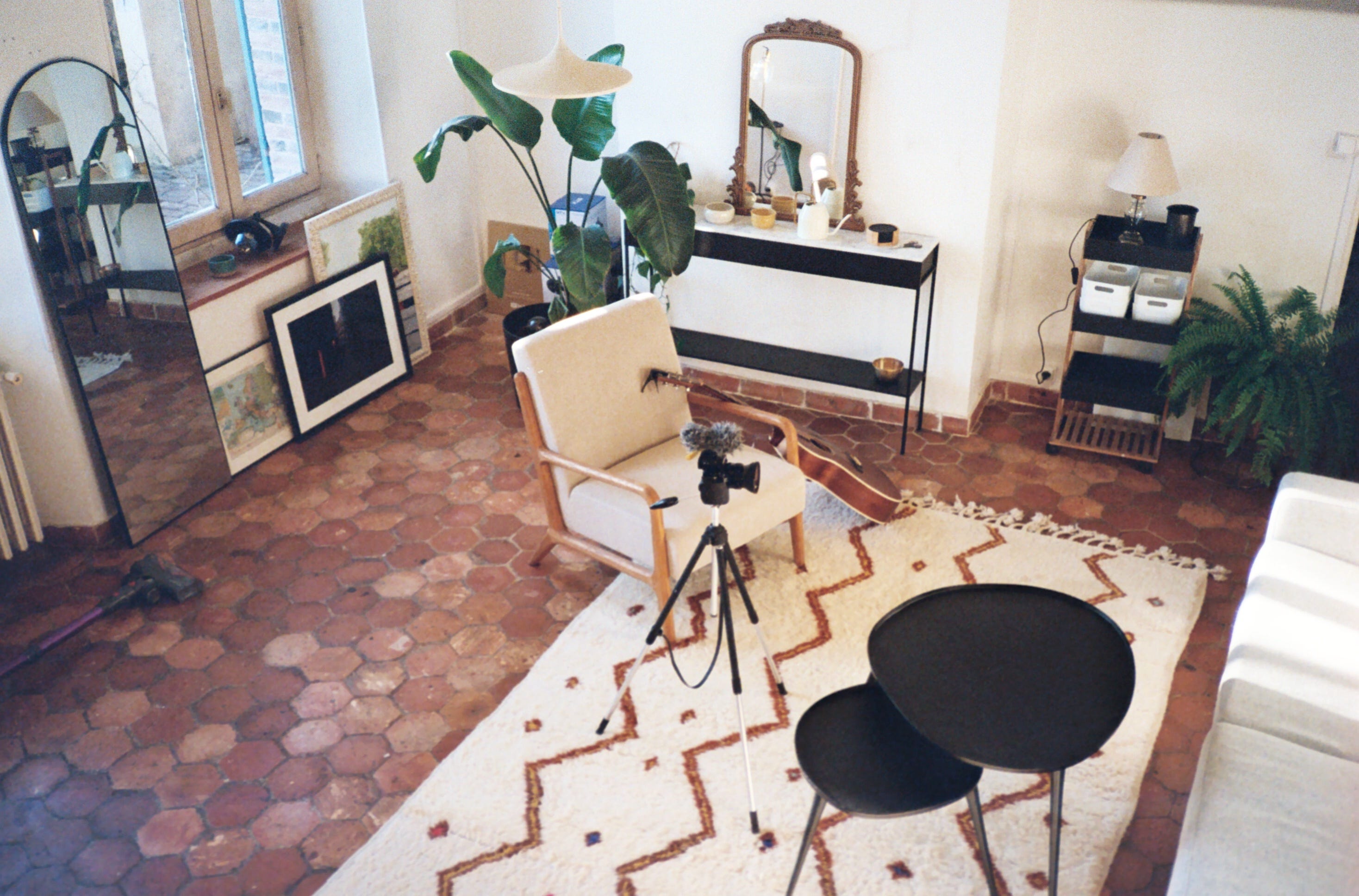
Very early on in my life, I realized that when you have resources, you have more options available to you. If you are not desperate for money, you have far more leverage to work with. As soon as I connected those two dots, I became very focused on accumulating resources. Not for status, not for power, but for flexibility, or maybe a more apt word would be freedom. I did not want to ever be stuck with a job I hated. I did not want to be in situations where I had to make decisions because my hand was forced.
My dad talked to me at length about how stressful and scary it was to be underwater in debt, which was a situation my parents once found themselves in. Lifestyle decisions were made and the bill eventually came. I saw how they had to scramble to make things work. It was a hole they had to strain to dig themselves out of and once they did, they vowed never to do it again.
This helped inform my decision not to go to University and begin my adult life buried in debt. So that was one gigantic bullet dodged. But as I believe we all experience as adults sooner or later, there are about a million different ways to miscalculate the cost of things and get yourself in financial trouble.
When I was 19 years old, I had managed to save about $5,000 dollars. This was the result of summer jobs that I began when I was 13, and then freelance work that I began during High School.
I didn’t have many possessions, maybe because I couldn’t afford to buy much stuff and also because I hadn’t yet had the time to accumulate things. Every new purchase was a big fucking deal, it would get my blood pumping to pull the trigger and buy. My MacBook Pro was my most valuable possession by far.
One warm day, I took my prized possession to do a little video editing on my parents’ patio. I sat on a reclined wooden porch chair with wide arms. After a while I had to go use the restroom. I naïvely placed my laptop on the right arm of the chair, so that I could get up. But of course as I rose from the awkward position of leaning back, I knocked my open laptop over and watched it swiftly plummet to its demise. “Plummet” isn’t even the right word – it fell a mere foot and a half, but that was enough. The laptop crashed sideways on the porch, and the screen was never going to win that encounter, cracking upon impact, revealing ugly green and purple lines.
No choice but to get it repaired.
Repairing the screen cost me $400 because I didn’t have a warranty on it. $400 at that time had to be around 5-10% of my entire net worth, gone in an instant. At that stage of my life, it was going to take me at least a week to make back that money.
Of course it stung. But what was I going to do? I couldn’t not fix it. That MacBook Pro was also probably one of the best investments I ever made, being the tool I most relied on to do what I do. Often, you have to spend money to make money.
Things like this happen, you just have to accept it. It was a one-off.
Except, nearly a decade on, I’ve come to realize that this is not a one-off. Yes, I’ve only ever knocked over and broken a laptop once, and you just read how it happened. But what I’ve learned is that objects consistently break, wear down and need care and attention. The way it happens can vary wildly, but the fact that it happens is incredibly consistent. This is very obvious and everyone understands this on some level. And yet, I feel like I have a different understanding of what this actually means after accumulating more possessions. I don’t just understand the theory, I’ve now lived it.
There are two different costs that come with the purchase of something new:
1) The object’s initial price tag.
&
2) Everything that comes after: the effort, energy and money that goes into maintenance, repairs and replacements.
At first you don’t think much about the second part because it’s not much. Most objects individually do not require much effort or care to be maintained or repaired. If you are careful, you don’t have to replace the object for a while. A hole in shirt here, a crack in a bowl there. You forget your notebook at the train station or two of the wheels on the luggage jam. The plant dies, wine is spilled on the rug, the toothbrush’s battery gives up on you. This only begins to become significant – something that bogs you down – in the aggregate, as in when you start to have a lot of things, or when you acquire big things.
I don’t believe anyone thinks to themselves “I want a lot of stuff.” I never had that thought or desire in my life. Usually what ends up happening is one thing leads to another. A home requires furniture. A passion for running or biking or surfing requires the relevant equipment. A dog also means you need a dog bed and toys and maybe a leash and food and water bowls and probably pet toothpaste and dog treats. It means walks and vet appointments and I promise you it will make airplane travel harder and more expensive. But you usually don’t think about all of the strings attached, you usually start out just thinking about how nice it would be to have a dog.
I am thinking deeply about the cost of things this year, because last year I was really into the idea of having a backyard to myself in the countryside. Which I then got. And it is very nice indeed, a real privilege and luxury. I am making the most of it.
But in parallel, my eyes have opened to everything that comes with it. To even be able to live here, I had to buy a car. I didn’t think about that when this idea for a life in the countryside first popped in my head, even though it’s pretty obvious. Buying a car meant I had to get car insurance. To legally drive in France, I had to get my French driver’s license. That cost 1,000 euros, and the car insurance is 700 euros per year. Once I had the car, I had to pay an electrician to set up a power outlet outside to charge the car (it’s a hybrid). I have had to replace the tires of the car twice already, once because I bought the car used and the second time because a pothole led to a flat tire. Recently, when coming back from a trip to Paris, I discovered a new scratch on the side of the car in the parking lot where I left it, that another car must have made while parking. Shit.
But that’s just the car, I was talking about a backyard, remember? Which itself needs maintenance. This means buying all of the tools you need to do that work, and then either committing time and energy to maintaining it or hiring someone else to take care of it, both of which are different kinds of resources. You could get a robot to cut for you but that’s another big purchase, requires time to program and will eventually break.
“Rewilding” is wonderful and so much better than obsessively cutting a lawn but even then you have to do some maintenance or things get completely out of control, trust me. The ivy keeps returning, the trees need pruning, and I’m at my wits end with weeds.
These are all first world problems. I’m really damn lucky to even be in this situation, with a backyard, a car and yard tools, I’m lucky to be healthy and to not live in a war torn country. I’m lucky anyone wants to read these words at all. This isn’t a “woe is me” situation – the point I’m making is simply that our possessions ask a lot more of us than we realize. It’s not just a backyard, there is a lot of other stuff that comes with a backyard, and the yard itself has an ongoing cost to it.
Which brings me to what I’d like to call Nathaniel’s Dilemma.
Nathaniel’s Dilemma pits two opposing forces against each other. On one side, there is the allure that having things comes with: comfort, safety, pleasure, status, stability, or some combination of all of those things.
The other force at play is the joy of not having things. When I was 19, I just didn’t have much in the way of possessions and this meant I had less things to carry around with me, physically but even more importantly, psychologically. I could pour all of my attention and energy into my projects.
This is not true of my life in 2025. I can feel the weight of the things that I have. I write about this because something really shifted for me this summer: the weight of the things I own is now clearly far out outpacing the joy of having those things. I am making the most of it while I have it, but this is not a situation I was to stay in, long term. Another way of putting it: what I have is nice, but not what comes with having what I have. I’m getting tired of always worrying about the upkeep of the things that I have. Finding the scratch on my car was upsetting to me. I don’t even care about my car, I’m not sentimental about it at all. I’m not a car guy. It’s just that I don’t want it to lose it’s value, since I had to pay a lot of money to buy it. I don’t like throwing money away. All of this makes me want to get rid of my car, honestly.
There is a third cost to the things that we have, and this is the most important: the cost of what you must reduce or eliminate from your life when you are so occupied repairing, maintaining or replacing the things you own. This is what has begun to happen to me. I have had far more limited bandwidth for my creations, and this makes me sad. That for me is the feather that is breaking the camel’s back. It’s just not worth it to me to have all of these things.
This isn’t really about minimalism. I don’t love that word. There’s something about it that feels rigid and about control.
What I’m describing is simpler than that. It is about the joy of traveling lightly through life. The feeling that one experiences when walking out their front door with a backpack that does not not dig aggressively into their shoulders.
I have no intentions of becoming a “minimalist.” I enjoy having things. I like my guitar, and the black jeans I just had tailored, and my collection of Fujifilm lenses. But I realized I have far more things than I need, and that they come at a far greater cost than I realized. A cost that I’m not willing to pay over the long term. Sometime soon, I’d like to lighten the load that I am carrying. There are more important things I would like my energy and attention to go.
To be continued.
A very interesting read. Thank you. And a curious development as well, given your fairly recent purchase of the house. But. And I will frame this 'but' with some context - I too have given up all, a number of times, and travelled freely with only what I could carry. And have settled into a purchased house here and there along the way as well, including my current status here in France. There are no hard and fast rules. But (there it is again) there are recognitions. And especially and more importantly solutions. There are always solutions, you just have to find what is right for you.
I am not a minimalist, but I recognise that things accumulate and cost. And that requires a level of realisation that you have to make money. And I wonder if it is the having to to sustain the lifestyle that is more binding, not the things or their consequent costs. I prefer to live simply, to make do, to repurpose, etc blablabla. But that is what is important to me, when I am stationary. After a few moments of stress in owning (or paying) for too much, I gave it all up to travel and then stay put again. Re-cycle.
I think I have finally cracked it. But (that annoying word) I am not sure I can truly explain, though I would like to. I discovered I used to go with what was expected, rather than what I wanted. You mentioned having to buy a car in example. Really? Could you have made do with a scooter and hiring a car when you needed? (As I have no idea how isolated you are, these could be rhetorical questions.) Why a hybrid? Why not a scooter? Why not a clanger of a car? I have gone through 3 cars here in France in the last year - certainly valuable money spent, and very real lessons learned. Not to mention French paperwork! And finally, fingers crossed, I am good with what I have. But it was a journey of solutions. I needed a car - but I didn't really think through what was best for me. And it took 3 go's to discover this. And now, yes I pay for my car, but it doesn't inflict any emotion on me.
Anyway I ramble, I think it is hard to separate expectations from what is truly needed - down to the very very simple things. Being intentional certainly helps. Being aware that things don't matter really does. But getting the head to realise that, well, that is another matter. And takes time. Bonne chance.
Can totally relate. I used to dream of being rich enough to build a huge home with a games room, half indoor/half outdoor pool, numerous bedrooms and bathrooms and of course big party-worthy grounds! Then I looked around my pokey little rented London flat and realised I couldn’t even keep that clean and maintained, so I ditched that idea. Now many years later, having had to maintain 3 different bricks and mortar businesses along the way, I’m converting a bus into a home. It will still be a possession I need to care for and maintain but I love the idea of tiny living and tiny living on wheels is even more freedom!
P.S. All cars get scratched, buy old second hand cars and drive them till they die. You will never care about the odd scrape and scratch!